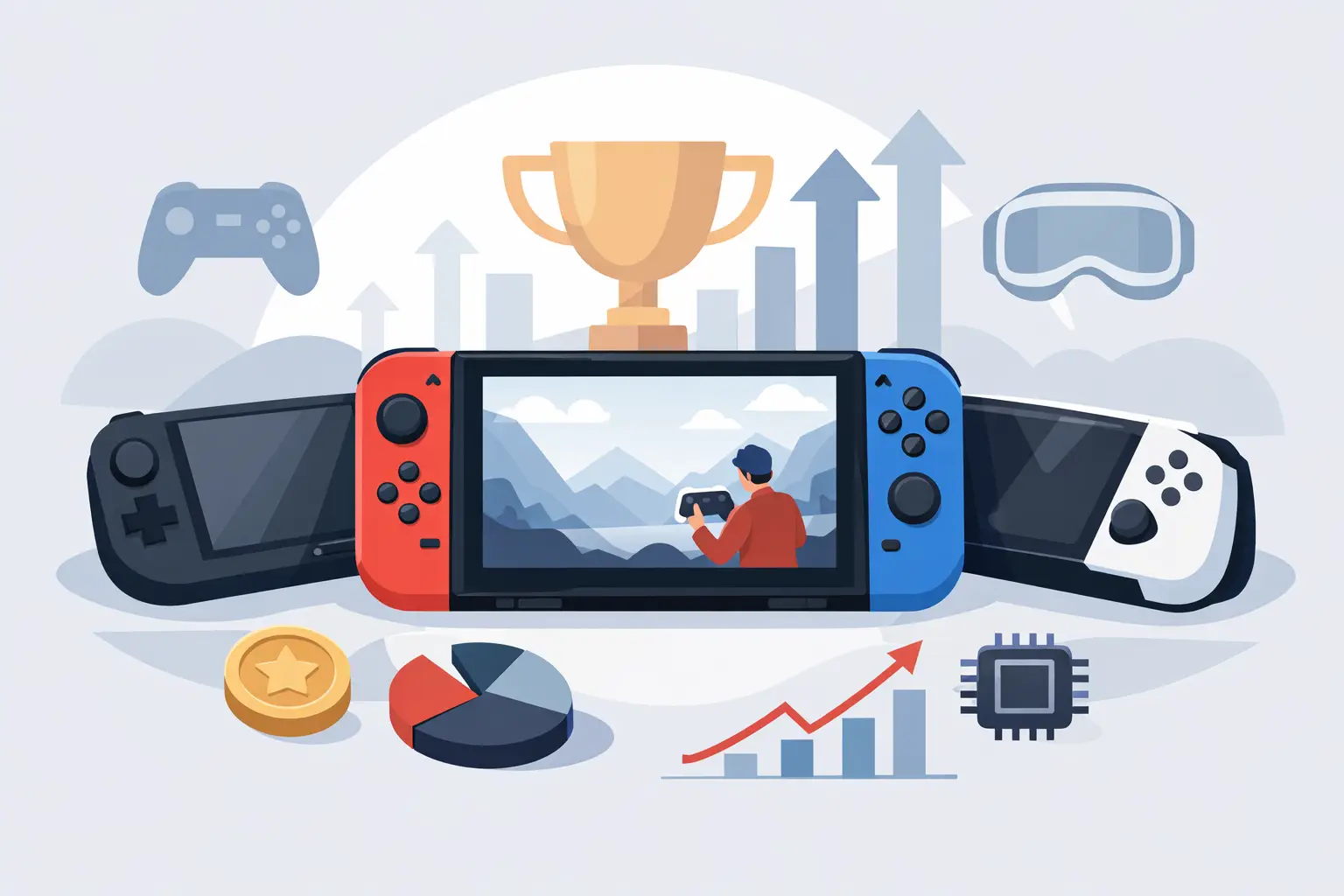
The next Nintendo console will not be judged in a vacuum. The Nintendo Switch 2 competition is already taking shape, and it is not just about raw power or flashy specs. It is about who wins the battle for real-life play - on the sofa, on the train, between shifts, after the kids are in bed, and during those moments when you want something fun without spending a fortune.
That is exactly why this fight matters. Most players are not comparing teraflops over a spreadsheet. They are asking simpler questions. What can I play? How much will it cost me? Will it fit around my life? And if I am spending serious money on a new console, will it still feel like a smart buy six months later?
Nintendo Switch 2 competition is bigger than just PlayStation and Xbox
When people talk about rivals, the first names out of the gate are usually PlayStation and Xbox. Fair enough - both are huge, both have massive game libraries, and both still dominate a lot of the traditional console conversation. But the Nintendo Switch 2 competition is broader than that.
Nintendo is not only competing with powerful home consoles. It is also up against PC gaming, handheld PCs, mobile gaming, subscription services, and even the growing number of players who are happy replaying older titles instead of upgrading at all. That changes the rules.
A PlayStation 5 can offer blockbuster visuals and prestige releases. An Xbox Series X can push strong performance and a broad ecosystem. A handheld PC can promise flexibility and access to giant digital libraries. Meanwhile, smartphones are still the easiest gaming device most people already own. Nintendo has to win attention in a market where convenience often beats technical bragging rights.
That is why simply being more powerful than the original Switch will not be enough. The machine has to feel worth it. It has to make players think, yes, this is the one I want to play on every day.
The real rivals to watch
PlayStation 5 and Xbox Series X|S
These are still the obvious heavyweight competitors. They offer bigger visual leaps, more traditional online services, and a library packed with big-budget action, sports, and shooter titles. If your priority is cutting-edge graphics on a large TV, Nintendo has never really tried to beat them head-on.
But there is a trade-off. Those platforms often ask for a larger spend upfront, and the full experience can become expensive once you add extra pads, subscriptions, storage upgrades, and full-price games. For plenty of households, that matters.
Nintendo usually plays a different game. It sells on accessibility, recognisable exclusives, and the kind of machine that can be shared around the home. If Switch 2 keeps that ease while improving performance, it will stay in a lane that Sony and Microsoft do not fully cover.
Steam Deck and handheld PCs
This is where things get interesting. Handheld gaming is no longer Nintendo territory by default. Devices like the Steam Deck have shown there is real appetite for portable gaming that feels serious rather than secondary.
For some players, that is a huge pull. You get access to a broad PC library, flexible settings, and a device that can do more than one thing. If you already own plenty of PC games, the value can be obvious.
Still, handheld PCs are not for everyone. They can be heavier, fiddlier, and less plug-and-play than a Nintendo console. Setup can be less friendly, battery expectations can vary, and the experience can feel more like managing tech than simply jumping into a game. Nintendo's edge has always been simplicity. Press button, start fun, job done.
Mobile gaming and cheap entertainment
This is the rival people underestimate. Mobile gaming is not trying to be a premium console experience, but it wins on price and convenience every single day. If someone is already watching their spending, free-to-play games on a phone can be hard to ignore.
That does not mean mobile replaces console gaming. It usually does not. But it does compete for time, attention, and money. Every pound spent on one platform is a pound not spent elsewhere. If the Switch 2 lands at a high price point, that pressure becomes more obvious.
What will decide the winner?
Price will matter more than tech forums admit
Specs create headlines, but price closes sales. If the new console is positioned too high, the excitement can cool quickly, especially for families and casual players who loved the original Switch because it felt within reach.
There is a sweet spot here. Players want an upgrade that feels modern, smoother, and more future-proof. But they also want to feel like they are getting proper value. If the entry price climbs too far, then used consoles, older Switch models, Xbox Series S bundles, and handheld alternatives all start looking tempting.
That is why gaming prizes generate such buzz. A high-demand console feels exciting, but buying one outright can sting. For value-focused players, the chance to win one for a tiny outlay feels far more realistic than dropping hundreds in one go.
Games will always beat gadget talk
Nintendo knows this better than anyone. Hardware starts the conversation, but games finish it. The strongest weapon in the Nintendo Switch 2 competition is not a spec sheet. It is whether the system launches with games people cannot wait to play.
Mario, Zelda, Mario Kart, Pokémon - those names move consoles. They are familiar, cross-generational, and easy to get excited about. A lot of people who would never compare processors will still buy a machine if the next big Nintendo exclusive lands at the right moment.
There is another angle too. Third-party support matters more this time. If developers can bring more current titles to the platform without major compromises, the Switch 2 becomes much easier to recommend as an everyday main console rather than a secondary one.
Flexibility still gives Nintendo a unique advantage
Hybrid play changed the market for a reason. Being able to start on the TV and carry on handheld still feels useful, not gimmicky. It suits busy lives. It suits families sharing screens. It suits players who do not always have hours blocked out for gaming.
That flexibility is where Nintendo can still stand apart. Sony and Microsoft offer stronger living room power, while handheld PCs offer broad libraries, but Nintendo can own the middle if the new machine feels polished, portable, and hassle-free.
The danger is complacency. What felt fresh in 2017 is now expected. To stay ahead, Nintendo has to make the hybrid experience smoother, sharper, and quicker without losing the easy appeal that made the original so popular.
Who is most likely to buy it?
The obvious audience is existing Switch owners ready for an upgrade. That group alone is massive. But the bigger opportunity is wider than loyal fans.
Parents looking for a console that does not feel too complicated, adult players who want something flexible after work, and shoppers hunting value rather than maxed-out performance all sit in the target zone. These players are not always trying to own every console. They want one machine that feels fun, practical, and worth the spend.
That is why the Nintendo Switch 2 competition will be decided in ordinary homes, not only among hardcore enthusiasts. If the machine can deliver strong new games, better performance, and a sensible overall cost, it has a very real shot at becoming the default choice for people who want gaming without friction.
Where prize competition interest fits in
When a console launch gets this much attention, demand usually arrives before discounts do. That is when prize competition audiences start paying close attention. A brand like Proudlocks Competitions speaks directly to that crowd - people who want a real shot at winning sought-after tech without swallowing the full retail hit.
It makes sense. A new Nintendo console is exciting, but everyday budgets are still under pressure. Low-cost entry, a fair free postal route, visible winners, and a straightforward process can feel a lot more approachable than trying to justify a big one-off purchase.
That is not just hype. It reflects the way many people now shop for premium products. They still want the fun stuff. They just want smarter ways to get access to it.
The likely outcome
Nintendo does not need to beat every rival on every measure. It only needs to stay strongest where its audience cares most. That means brilliant first-party games, a hybrid format that still feels genuinely useful, and a price that does not scare off the people who made the first Switch a phenomenon.
If it gets that balance right, the Nintendo Switch 2 competition will not be a straight fight over power. It will be a fight over lifestyle fit, affordability, and pure playability. And that is a contest Nintendo has won before.
For players, the smart move is not to get lost in the noise. Watch the games, watch the pricing, and ask whether the console fits the way you actually play. That answer usually tells you more than any launch-day headline.